Eat only flowers you can identify and that were grown for food use, then treat them as flavor and color.
Identification comes first
A flower is not edible because it is pretty, common, or mentioned in a social post. Confirm the species, the edible part, and the growing conditions. Avoid flowers from florists, roadsides, treated lawns, or places where animals and sprays are uncontrolled.
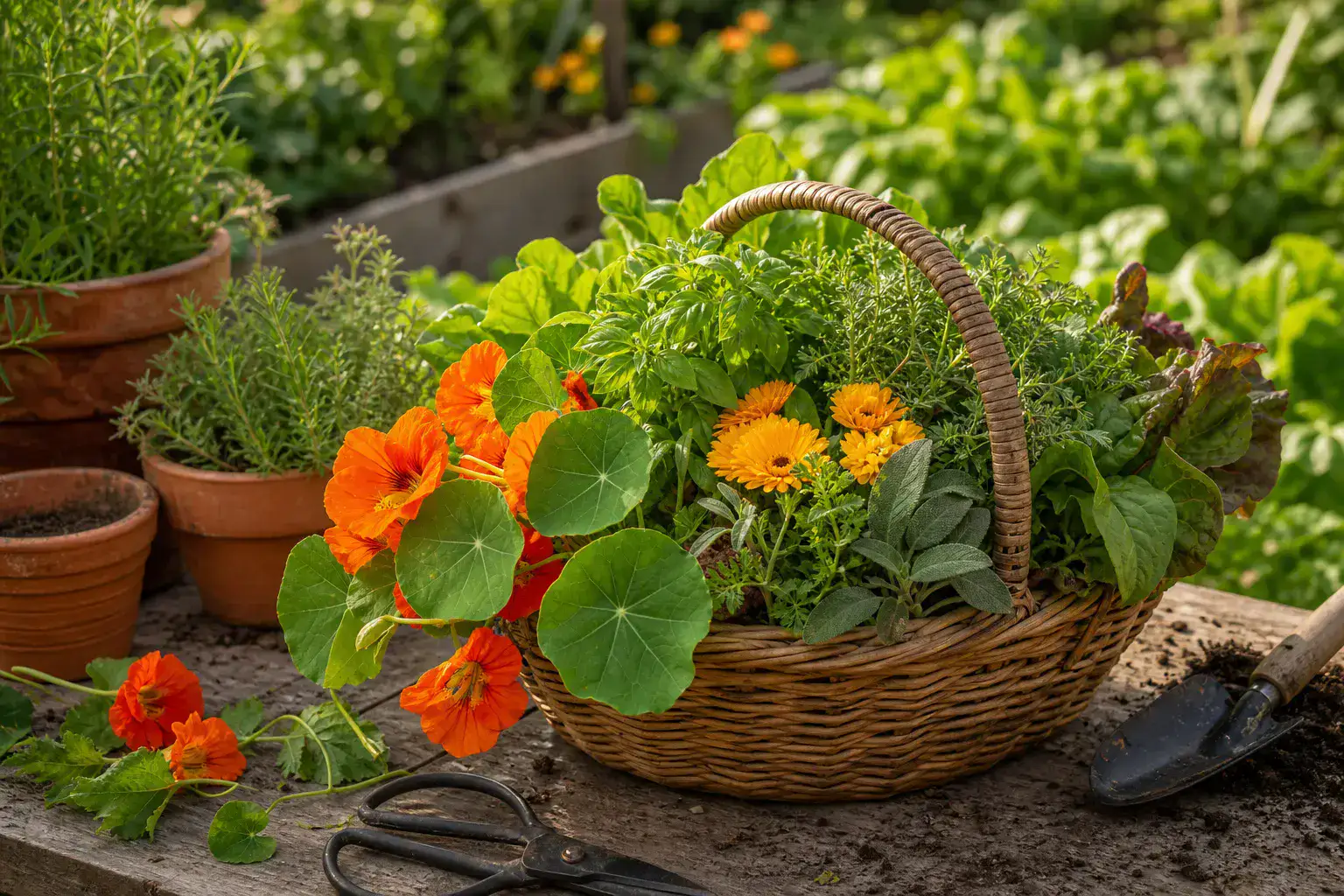
Nasturtium, calendula, and some herb flowers are common food-garden choices, but even familiar plants can be wrong for a particular person or preparation. When uncertain, leave it in the garden.
Use a little, keep it honest
A few petals can lift a salad, grain bowl, or simple cake. They do not need to carry a health claim. Rinse as appropriate, keep the flowers cool, and use them soon because their texture changes quickly.
USDA MyPlate's vegetable guidance is a useful example of how to talk about food without turning one ingredient into a cure. Variety, amount, and the whole pattern matter more than a single decorative addition.
The garden is the source
If you want edible flowers, grow a small patch with food use in mind and label what you plant. That simple record makes the kitchen safer and gives the garden another harvest rhythm.
The best flower garnish is still an invitation to notice the season. It should make the plate more alive, not make the claim larger.
Use the scientific name, not a familiar nickname
Common names are unreliable. A name such as marigold can point readers toward different plants, and not every plant or plant part attached to a familiar word belongs on a plate. Colorado State Extension recommends confirming the scientific name and the edible portion. If the identification is incomplete, the safe kitchen decision is to leave the flower outside.
Source matters as much as species. Florist, nursery, roadside, and treated landscape flowers may have pesticide or contamination histories that are unsuitable for food. Grow from seed intended for the edible garden, buy from a food producer who can answer how the crop was handled, or do not use it.
Keep the plant label and the seed packet in a garden record. Photographing the label beside the bed is more useful than relying on memory after several varieties begin to bloom.
Harvest for flavor, then handle like produce
Pick flowers at their peak, before they wilt or brown. Check them for insects and disease, remove the parts a trusted guide says are not used, and rinse gently when appropriate. Colorado State advises introducing a new edible flower slowly because sensitivities and allergies are possible even when the species is correctly identified.
Flavor should decide the dish. Nasturtium can be peppery, calendula can be tangy, and herb flowers often echo the leaf with a different intensity. Taste a tiny verified piece before scattering petals over a full meal. A garnish should support the ingredient already on the plate.
Cool harvested flowers and use them promptly. Home-infused oils, vinegars, candied flowers, and other preserved preparations introduce their own safety questions, so use a tested method rather than extending the life of a decorative idea by improvisation.
For guests, identify the flower before serving and leave the garnish optional. A written menu note can name the species and source. That small act preserves the pleasure of a seasonal detail while respecting allergies, preferences, and the limits of what the host can know.