
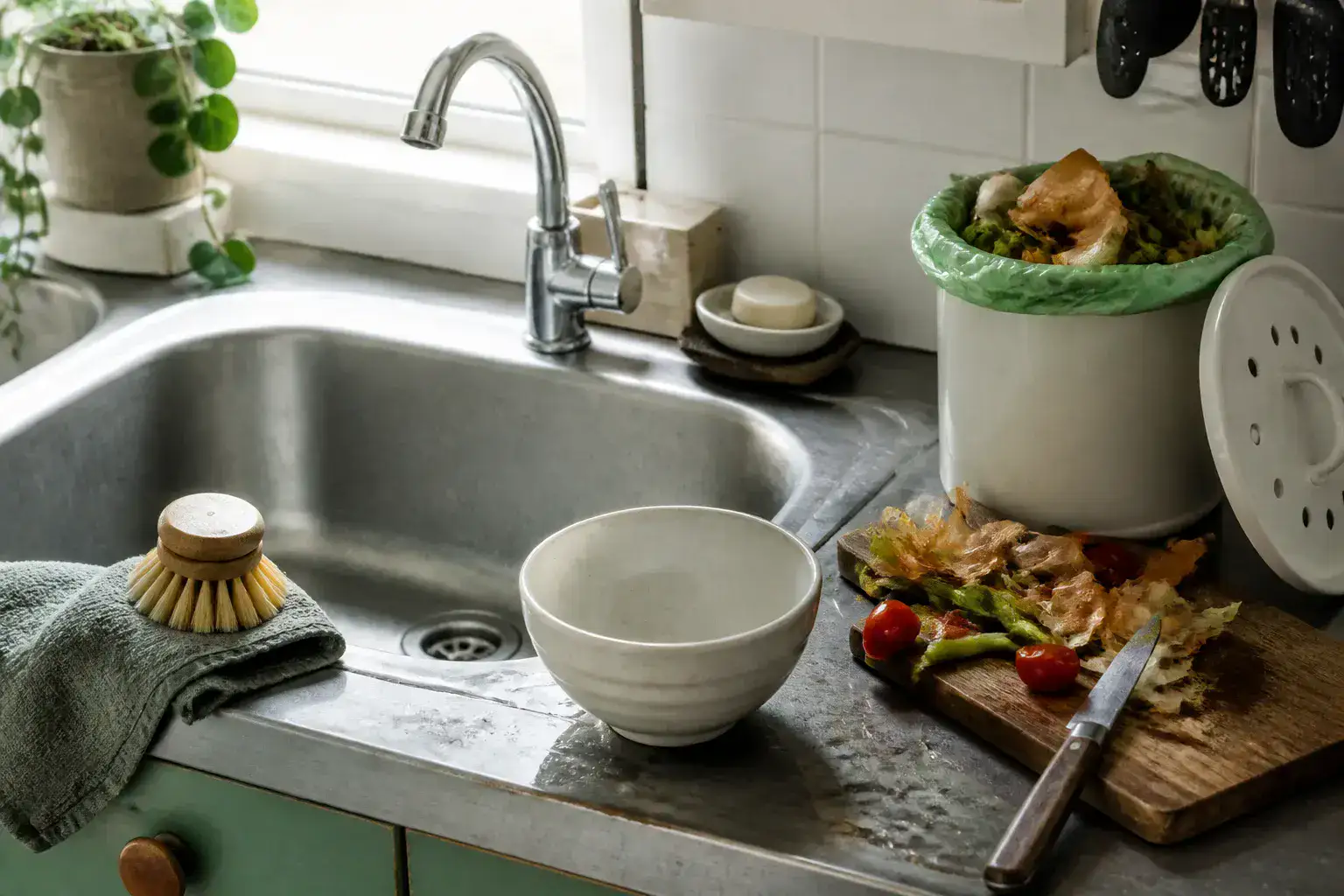
The most sustainable cleaning choice is usually the routine that prevents waste and keeps the kitchen safely usable.
Follow the material
A food system does not end at the market stall. It continues through the refrigerator, the cutting board, the sink, and the bin. When a household buys more than it can use, stores produce badly, or cleans in a way that creates avoidable waste, the field and the kitchen are quietly connected.
EPA's source-reduction guidance starts with buying, preparing, and storing only what can be used. That is a more practical frame than searching for a perfect product.
Use less through a better rhythm
Keep a short list of what needs using, wash tools with the least water that does the job, and choose durable cloths or brushes that can be cleaned. Follow product labels and local wastewater rules; household chemistry is not a place for improvisation.
The goal is not a spotless identity. It is a kitchen that stays safe, functional, and aware of what it sends away.
Soil is downstream too
NRCS soil-health guidance emphasizes cover, living roots, and biodiversity in the field. At home, keeping food scraps out of the bin when a safe local compost route exists is one small way to keep the resource conversation visible, though local collection rules decide what belongs there.
Sustainability becomes credible when the next action is specific and the boundary is stated.
Separate food soil from cleaning soil
A cutting board used for raw ingredients, a pan with cooked-on food, and a dusty market basket do not present the same cleaning task. Start by removing scraps into the correct local stream, then use the product, water temperature, contact time, and rinse directions appropriate to the surface. More foam is not proof of a safer result.
Keep cleaning products in their labeled containers and away from food. Never combine products unless the manufacturer explicitly directs it. A homemade mixture may create fumes, damage a surface, or leave a residue even when each ingredient sounds familiar. Product labels and local poison-control guidance outrank a social-media shortcut.
Cloths and brushes also need a drying and replacement routine. A reusable tool only reduces waste when it can be cleaned, dried, and used without spreading yesterday's soil across today's preparation area.
Prevent waste before deciding where waste goes
Composting can recover value from unavoidable scraps, but it cannot recover the water, land, labor, cooling, and transport already invested in edible food. EPA source-reduction guidance puts prevention first. Shop with a use plan, store crops where they remain visible, and move aging produce into a cooked dish while it is still sound.
Create three destinations during preparation: edible now, useful later, and unavoidable scrap. Broccoli stems may be sliced, herb stems may flavor a pot, and sound vegetable trimmings may become stock. Other material belongs in the local compost or trash stream according to its rules. The categories change with the ingredient and the municipality.
This is where the sink joins the field. A short, repeatable routine keeps water, cleaning products, food, and scraps from becoming one anonymous flow. The environmental claim stays modest, but the household decision becomes visible.
Post the local compost rules where scraps are sorted and the cleaning dilution directions where products are used. Clear instructions reduce guesswork for everyone sharing the kitchen. The result is less about personal virtue and more about a system that still works on a crowded weeknight.