
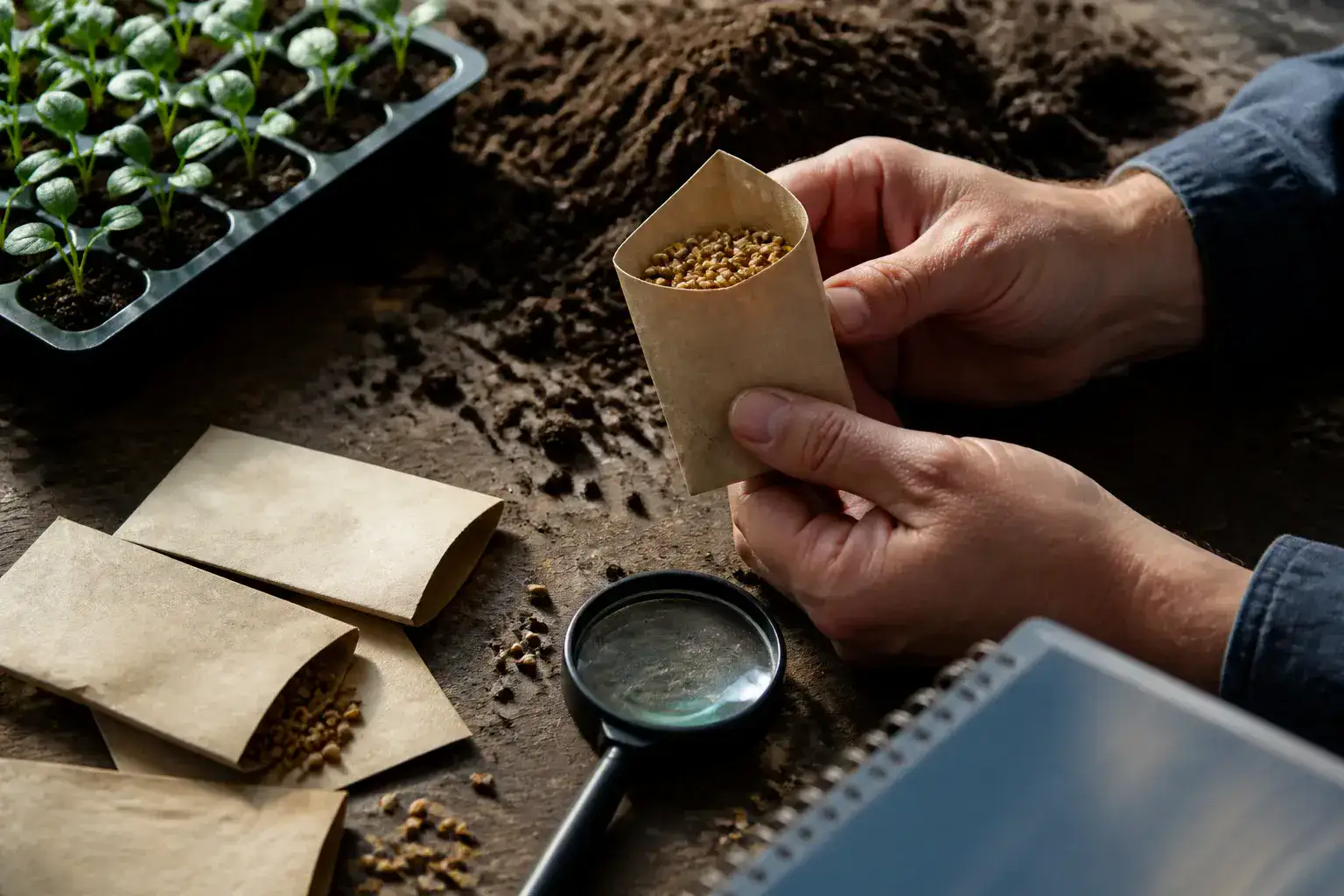
A better food-systems conversation separates the production method from the claim someone wants you to believe.
Ask what the label means
A seed technology, a farming practice, an organic label, and a claim about health are not interchangeable. Start by naming the exact question. Are you asking how the seed was developed, what inputs were used, how a product is labeled, or what evidence supports a benefit?
The USDA National Organic Program is a useful boundary marker because organic is a regulated label with standards and certification. It is not a synonym for every practice someone may value, and it does not answer every question about a crop.
Keep the field in view
Farmers choose tools in a system of weather, labor, pests, soil, markets, and risk. NRCS soil-health guidance points to cover, living roots, reduced disturbance, and biodiversity as principles that can guide management, but the right mix still depends on the farm.
A consumer question becomes more respectful when it leaves room for the grower's actual constraints. A grower explanation becomes more useful when it names what the practice changes.
Evidence before certainty
Look for the original study, standard, or extension source behind a confident statement. Notice whether it is about a specific crop, an ingredient, a production system, or a broad population. Avoid turning a single finding into a promise for every dinner.
Good food literacy does not require everyone to share the same values. It requires enough clarity for people to say what they know, what they prefer, and what remains uncertain.
Separate safety review from disclosure
In the United States, FDA food-safety oversight and USDA retail disclosure answer different questions. FDA explains how foods from new plant varieties are assessed against the same safety requirements applied to other foods. USDA's National Bioengineered Food Disclosure Standard defines when regulated foods must carry a bioengineered disclosure.
A disclosure therefore communicates information about the product under a legal definition; it is not, by itself, a hazard rating, an organic certification, or a complete description of farm practice. Likewise, the absence of one word on the front of a package does not answer every question about ingredients, processing, pesticide use, or environmental outcomes.
When reading a label, identify the exact term, find the agency definition, and check whether the claim applies to the crop, the ingredient, or the finished food. That small sequence prevents several debates from being collapsed into one.
Ask about the trait and the production system
Genetic engineering is a set of methods, while an individual crop carries a particular trait. A claim about insect resistance, herbicide tolerance, nutrition, storage, or disease response should be evaluated at that level. The useful question is what changed in this plant and what evidence follows from that change.
Then widen the frame to management. Seed choice interacts with rotation, pest pressure, soil cover, labor, contracts, markets, and local regulation. NRCS soil-health principles can help readers ask about the surrounding system, but they do not tell a farmer which seed to buy or make every outcome of a technology identical.
Consumers can hold values about ownership, disclosure, farming scale, or environmental trade-offs while still reading safety evidence accurately. Precision does not settle every value question. It makes disagreement more honest and keeps one label from carrying claims it was never designed to prove.